Cozy Texture for Your Owl Cable Stitch Knitting Project
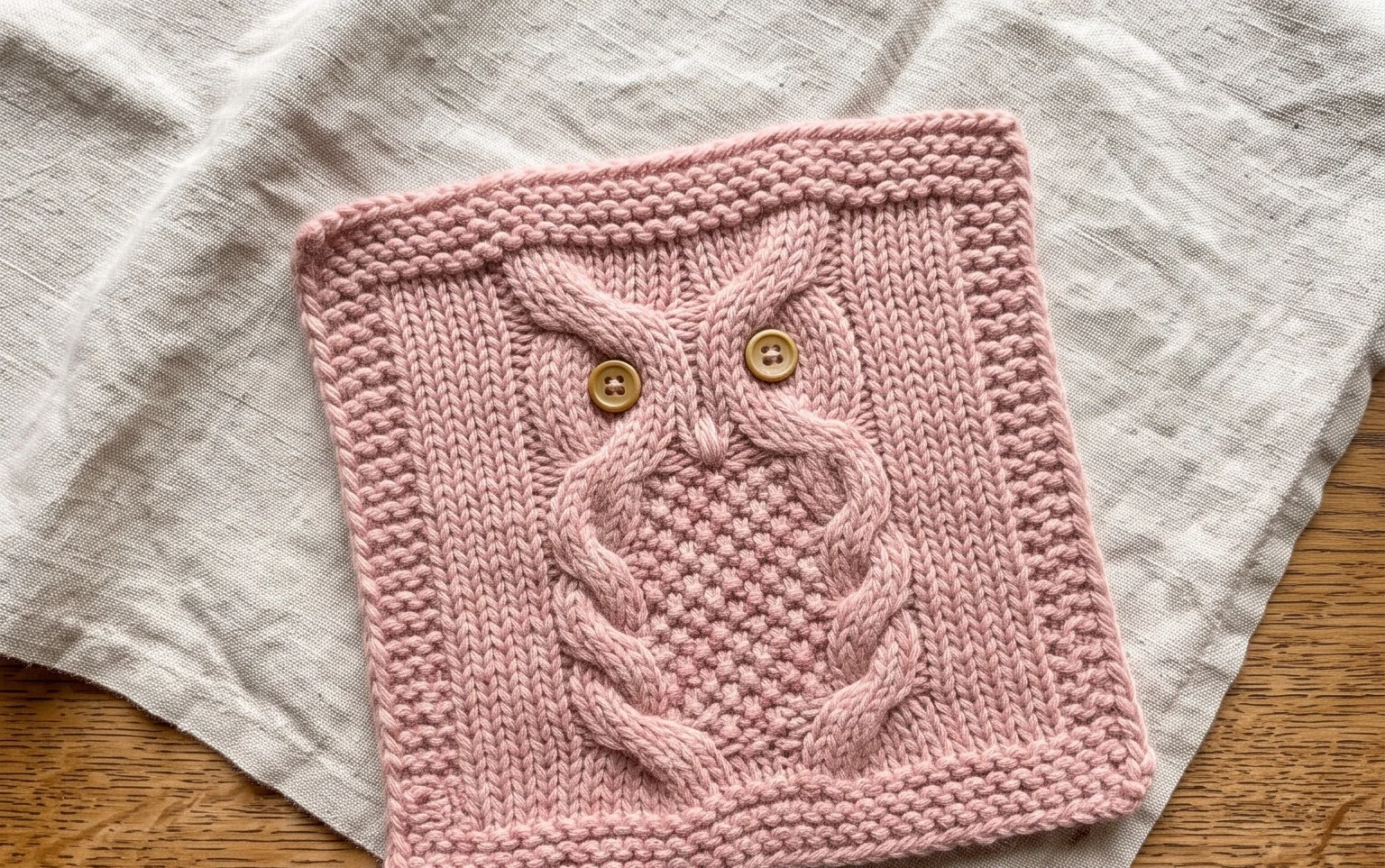
A pair of raised cable twists gives this owl pattern its rounded eyes and feathered look, with a small motif that stands out clearly against plain knitting. The finished fabric has a cozy, textured feel and suits a cushion, scarf panel, blanket square, or another handmade gift. If you enjoy home décor projects or want to try cables for the first time, this design offers a satisfying way to see a picture emerge from simple knit and purl stitches. You’ll learn how the cable crossings shape the owl and how to keep the surrounding stitches neat. The pattern also gives you a useful chance to practise reading a chart or following written cable instructions at a steady pace.
Why You’ll Love This Pattern
This cotton dishcloth is worked in simple single crochet rows, so the fabric is sturdy enough for everyday kitchen use and easy to keep track of as you crochet. Its small size makes it a practical way to use one ball of cotton yarn or finish leftover yardage from another project.
The pattern uses one stitch throughout, with no shaping or color changes. That makes it a useful first project for practicing even tension, turning chains, and counting stitches. A completed cloth also makes a handy handmade gift that can be used rather than stored away.
The rows were easy to follow, and the finished cloth feels firm without being stiff. I made it in an evening and have already started another for a housewarming gift.
— Mara, sample tester
Pattern Overview & Skill Level
- Skill Level: Beginner. You need to know how to chain and single crochet.
- Approximate Time: About 2–3 hours, depending on your pace and how often you stop to count.
- Construction: The cloth is worked flat in turned rows, beginning with a foundation chain. No seaming is needed.
- Finished Dimensions & Sizing: Approximately 7.5 in wide by 6 in tall (19 × 15 cm), before washing. Small differences in tension can change the final measurements.
Materials & Supplies Needed
- Yarn: About 90 yd (82 m) of worsted-weight (#4) 100% cotton yarn. One solid color is easiest for a first cloth; use a smooth, tightly spun yarn that can tolerate frequent washing.
- Hook Size: 5.0 mm / H-8 crochet hook. Use the size that gives you a firm fabric without making your hands uncomfortable.
- Notions: Tapestry needle for the yarn tails, scissors, and a ruler or tape measure. A removable stitch marker is optional and can help mark the first stitch of a row.
- Substitutions: A similar-weight cotton or cotton-blend yarn is suitable. A thinner yarn makes a smaller, lighter cloth; a thicker yarn makes a larger, denser one and may need a larger hook. Acrylic can feel less absorbent and may not suit a dishcloth used for drying dishes.
Stitch Guide & Abbreviations (US Terms)
- ch: Chain.
- sc: Single crochet. Insert the hook in the indicated stitch, yarn over and pull up a loop, yarn over again and pull through both loops.
- st(s): Stitch(es).
- rep: Repeat the stated sequence.
- turn: Rotate the work to begin crocheting back across the row.
- Turning chain: The chain made at the end of a row to reach the next row. In this pattern, ch 1 does not count as a stitch.
Keep the turning chain loose enough that the edge does not pull inward. Work the first sc of each row into the first stitch, not into the turning chain.
Step-by-Step Pattern Instructions
Stitch counts are given at the end of each row. The chain at the beginning of a row does not count as a stitch. To check your tension, measure after several rows: the fabric should lie flat, with no tight or wavy edges.
Dishcloth
- Foundation: Ch 31. The first 30 chains form the working width; the remaining chain is the turning chain for Row 1.
- Row 1: Sc in the second ch from the hook and in each ch across. Ch 1, turn. (30 sts)
- Row 2: Sc in each st across. Ch 1, turn. (30 sts)
- Rows 3–30: Rep Row 2. Ch 1 and turn at the end of every row except the final row. (30 sts each row)
- Finishing row: After completing Row 30, cut the yarn, leaving a tail of about 6 in (15 cm). Pull the tail through the loop on the hook and tighten gently. (30 sts)
Finishing
Thread the yarn tail onto a tapestry needle. Weave it through the backs of several stitches along the edge, change direction, and weave through a few more stitches so it is less likely to work loose during washing. Repeat with the foundation tail. Trim the ends close to the fabric without cutting any stitches.
Lay the cloth flat and smooth the edges by hand. If it measures notably smaller or larger than about 7.5 × 6 in, check your stitch and row gauge before making another. A slightly different finished size is still useful; matching the gauge is mainly helpful when you want several cloths to be the same size.
Care & Washing Instructions
- For cotton yarn, machine wash with like colors in cool or warm water, up to about 40°C (104°F); check the yarn label before washing.
- Dry flat or tumble dry on low if the yarn label allows it. High heat can shrink cotton.
- Reshape the damp cloth by hand and let it finish drying flat; blocking is usually unnecessary for a dishcloth.
Pro Tips & Common Mistakes to Avoid
- Keep tension steady: Cotton has little stretch, so overly tight stitches can make your hands sore and the cloth stiff. Relax your grip and test the fabric after the first few rows.
- Count the edge stitches: Count 30 stitches at the end of each row. If the count drops, you may have skipped the last stitch; if it grows, you may have crocheted into the turning chain.
- Secure tails neatly: Weave each end through the backs of stitches, then change direction before trimming. A short tail pulled through only one row can loosen with repeated washing.
- Adjust size with care: To make the cloth wider, add chains to the foundation; to make it taller, work more rows. Keep the stitch count consistent across each row. A larger cloth uses more yarn, and a wider foundation changes the number of stitches in every row.
Frequently Asked Questions
Can I use a different cotton yarn?
Yes. Choose a smooth yarn close to worsted weight and check that it is suitable for regular washing. A different brand may have a slightly different thickness, so the finished cloth may vary in size even with the same hook and stitch count.
How can I make the dishcloth larger or smaller?
Change the foundation chain to adjust the width, then work more or fewer rows to adjust the height. Keep one sc in every stitch and count each row. A larger cloth takes more yarn; a smaller one takes less.
Is this pattern suitable for a first crochet project?
Yes. It uses chains and single crochet without increases, decreases, or seaming. The main challenge is keeping 30 stitches in every row, so count regularly and check that the edges stay straight.
May I sell dishcloths made from this pattern?
Check the designer’s terms before selling finished items, and follow any requirements for pattern credit or online listings. Do not assume that permission to make an item also permits copying or redistributing the written pattern.
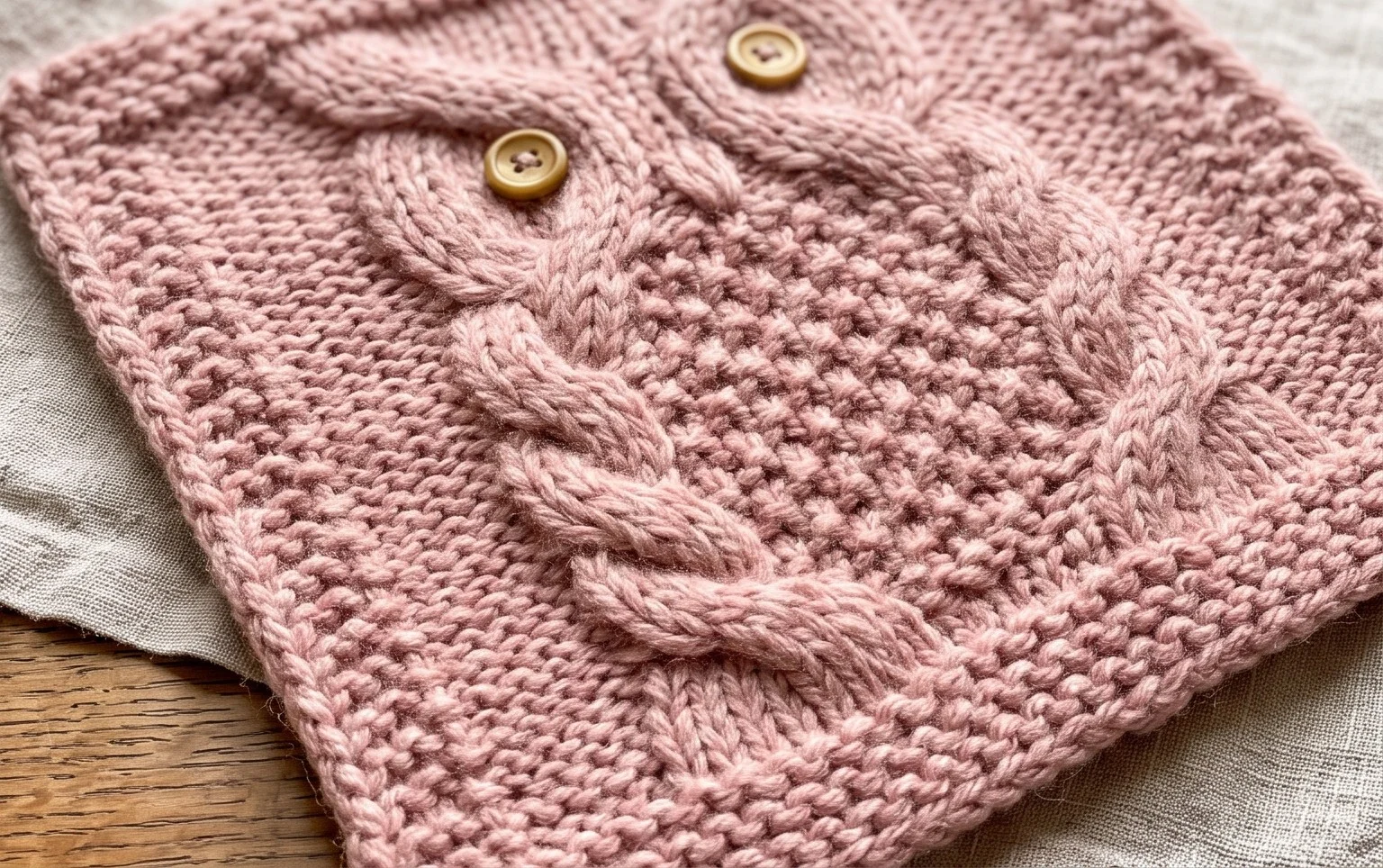
When the final cable crosses are complete, the little owl has a pleasing shape and plenty of texture to enjoy in a finished project. Try knitting the motif in a warm rust shade for a woodland feel, or use a smooth cream yarn to make the raised stitches easy to see. Take a photo of your finished piece and share it on Pinterest or your favorite social media platform; a close-up can show the cable details especially well. If you enjoyed working this motif, explore more free knitting patterns on the blog for your next cozy gift or home project. Keep your swatch nearby as you plan the next use for the design, and note the yarn and needle size that gave you the clearest cables.