Free Christmas Lights Coloring Pages for Kids & Adults
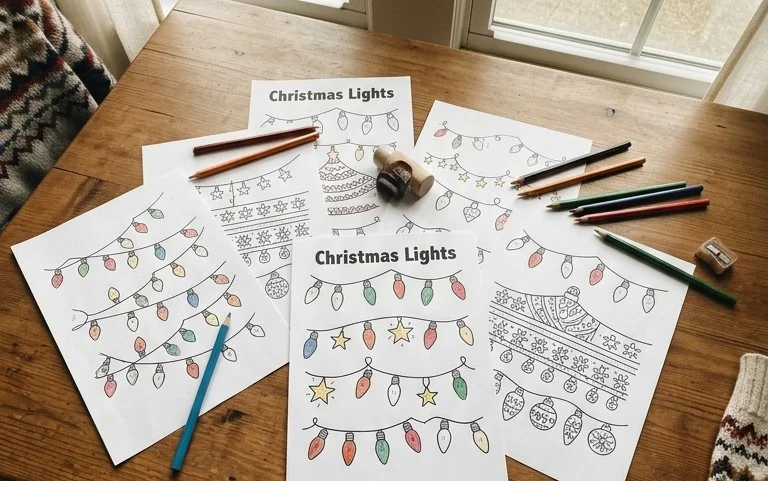
Bold bulb outlines and looping strands make these Christmas lights coloring pages simple to start and satisfying to finish. Kids can fill each bulb with familiar holiday colors, while adults can take their time with careful shading, patterns, or a more unusual palette. The pages suit a quiet afternoon at home, a classroom activity, or a small handmade gift when printed and colored. You’ll find designs that leave room for big, easy-to-color shapes as well as details for slower coloring sessions. Use crayons, colored pencils, or markers, and try blending two shades inside a bulb for a soft glow. The pages also offer a relaxed way to practice staying within outlines and choosing colors without needing special supplies.
Why You’ll Love This Pattern
A firm cotton stitch gives this simple dishcloth a useful texture for wiping counters and washing dishes. The rectangular shape is worked in single crochet rows, so there are no increases, decreases, or seams to manage.
This is a good first project for practicing even tension and counting stitches. It also uses a small amount of cotton yarn, making it practical for leftovers, and the repeat is easy to pick up again after a break. Make a set for a housewarming gift or keep one by the sink for everyday use.
The rows were easy to follow, and the cotton cloth came out sturdy enough for daily dishes.
— Mara, sample tester
Pattern Overview & Skill Level
- Skill Level: Beginner. You need to chain and make single crochet stitches.
- Approximate Time: About 2–3 hours, depending on your pace and how often you pause to count.
- Construction: Worked flat in rows from the bottom edge upward, with no seaming. A chain-one turning chain does not count as a stitch.
- Finished Dimensions & Sizing: Approximately 7.5 × 7.6 inches (19 × 19.5 cm) after washing and drying flat, using the gauge below. Cotton and individual tension can change the finished measurements.
Materials & Supplies Needed
- Yarn: About 90 yards of worsted-weight (#4) 100% cotton yarn in one color. Cotton is absorbent and handles frequent washing well.
- Hook: 4.5 mm / 7, or the size needed to meet gauge. If you crochet loosely, try one size smaller; if you crochet tightly, try one size larger.
- Notions: Tapestry needle for weaving in the ends, scissors, and a ruler or tape measure. A removable stitch marker can help mark the first stitch of a row.
- Gauge: 16 single crochet stitches and 20 rows measure 4 inches (10 cm) in the main fabric after washing and drying flat. Make a small swatch if matching the finished size matters.
- Substitutions: A similar-weight cotton or cotton blend can work, but check its care label. Acrylic is less absorbent and may feel different at the sink. A thicker yarn or larger hook makes a larger, looser cloth and uses more yarn; a thinner yarn or smaller hook makes a smaller, denser one.
Stitch Guide & Abbreviations (US Terms)
- ch: Chain.
- sc: Single crochet. Insert the hook into the stitch, yarn over and pull up a loop, then yarn over and pull through both loops.
- st(s): Stitch(es).
- rep: Repeat.
- turn: Rotate the work to begin the next row.
The turning chain is one chain at the beginning of each row. It does not count as a stitch, so work the first single crochet into the first stitch of the previous row.
Step-by-Step Pattern Instructions
Dishcloth
Use the same hook throughout. Keep the turning chain loose enough that the side edges do not pull inward, and count the stitches at the end of each row.
- Foundation: Ch 31.
- Row 1: Sc in the second ch from the hook and in each ch across. Turn. (30 sts)
- Row 2: Ch 1, sc in each st across. Turn. (30 sts)
- Rows 3–10: Rep Row 2 for each row. Turn at the end of every row. (30 sts per row)
- Rows 11–20: Rep Row 2 for each row. Turn at the end of every row. (30 sts per row)
- Rows 21–30: Rep Row 2 for each row. Turn at the end of every row. (30 sts per row)
- Rows 31–38: Rep Row 2 for each row. Turn at the end of every row. (30 sts per row)
Finishing
After Row 38, fasten off, leaving a tail long enough to weave in. Thread the tail through the tapestry needle and weave it back and forth through several stitches on the wrong side. Change direction once to help secure it, then trim the extra yarn without cutting into the fabric. Weave in the starting tail the same way.
Wash the cloth according to the yarn label, then lay it flat and gently square the corners. Measure it once dry. If it is noticeably narrower or shorter than expected, check your gauge before making the next cloth; adding or removing rows changes the height, while changing the foundation chain changes the width.
Care & Washing Instructions
- Wash cotton cloths in warm water, up to 40°C (104°F), with similar colors; follow the yarn label if it recommends a lower temperature.
- Dry flat to help the cloth keep its rectangular shape and avoid stretching it while wet.
- While damp, gently reshape the edges and corners; formal blocking is not usually needed for a dishcloth.
Pro Tips & Common Mistakes to Avoid
- Keep your single crochet tension even. If the foundation chain is much tighter than the rows, the bottom edge may draw in; make the chain with a relaxed hand or use a hook one size larger just for the chain.
- Count all 30 stitches on every row. Place a removable marker in the first stitch if you find it difficult to spot the last stitch at the edge.
- Weave in each end on the wrong side, moving through several stitches and changing direction once. A short, secure finish is less likely to work loose during washing.
- To change the size, add or remove foundation chains for width and rows for height. Each extra foundation chain adds one stitch to every row, and extra rows use more yarn; check the new dimensions as you work.
Frequently Asked Questions
Can I use a different yarn fiber?
Yes, but cotton is a practical choice because it absorbs water and tolerates regular washing. A cotton blend may work well if its label suits your intended care routine. Acrylic is less absorbent, and a different fiber can change the drape and size, so make a gauge swatch first.
How can I make the dishcloth wider or narrower?
Change the foundation chain, keeping an odd number so the first row begins in the second chain and gives the intended stitch count. Each extra chain adds one single crochet to each row. Measure as you work, since yarn and tension affect the final width.
Is this pattern suitable for a first crochet project?
Yes. It uses chains and single crochet stitches in straight rows, with no shaping or joining. The main challenge is keeping 30 stitches in every row; a stitch marker at the row edge can make counting easier.
May I sell dishcloths made from this pattern?
Check the designer’s terms before selling finished items. If the pattern source does not state its terms, ask the designer rather than assuming. Use your own photos and descriptions for any listing.
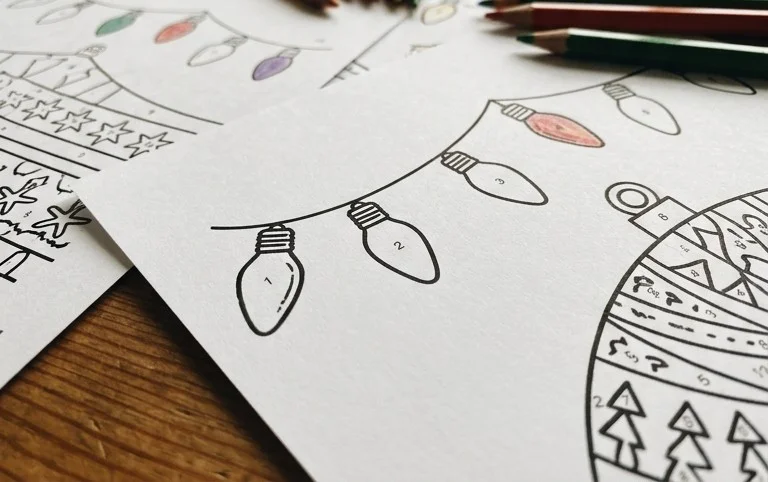
A finished string of colored bulbs brings a cheerful bit of holiday color to a fridge, desk, or craft table, and each page can look different with the same simple outlines. For one quick variation, give every bulb a different color, or use two shades of one color to add a gentle glow. Print a few copies on heavier paper if you plan to use markers, since thin sheets can show ink through to the other side. If you color a page, share a photo on Pinterest or social media so others can see your palette. Then browse the blog for more free seasonal printables and patterns to enjoy at home.