Beginner Quick Crochet Blanket: Easy Free Pattern Guide
A soft crochet blanket with neat, repeating rows can make a room feel more welcoming, whether it is folded over a sofa arm or tucked around your shoulders on a cool evening. This quick project suits beginners who want to practise a basic stitch, gift makers who need a thoughtful handmade present, and anyone who enjoys adding a cozy layer to home decor. The steady rhythm of working row after row makes it satisfying to watch the blanket grow, without needing complicated shaping or separate pieces to join. In this pattern, you’ll learn how to keep your stitches even, turn at the end of each row, and build a smooth fabric with a simple crochet technique. You can follow the instructions as written or adjust the colors to fit your space.
Why You’ll Love This Pattern
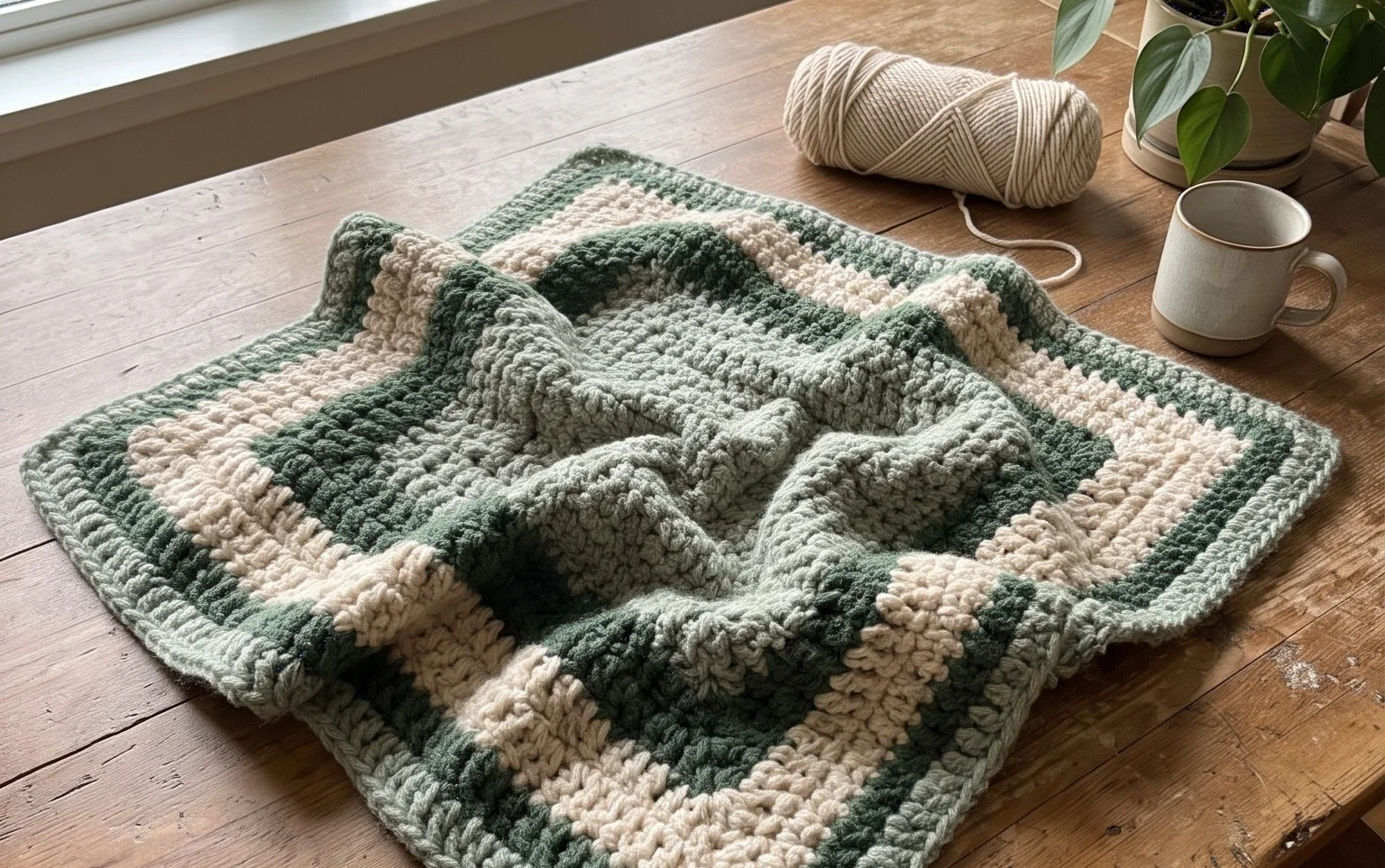
This crochet coaster is a flat, square project made with single crochet, so you can practise even rows without shaping or sewing pieces together. A single coaster takes about 1½ to 2 hours, and the small size makes it useful when you want a project you can finish in a sitting.
Worsted cotton gives the finished square a firm, absorbent surface for mugs and glasses. The pattern uses about 25 yards, which makes it a practical way to use leftover cotton yarn. Make a set in one colour for a matching table, or use different shades to keep track of whose drink is whose.
The rows were easy to count, and one coaster took me an evening. I used cotton left from dishcloths and got a neat, sturdy square.
— Lena, beginner crocheter
Pattern Overview & Skill Level
- Skill Level: Beginner. You need to make a foundation chain and work single crochet stitches in rows.
- Approximate Time: 1½ to 2 hours per coaster, depending on your pace and tension.
- Construction: Work one flat square in 20 rows of single crochet. The turning chain does not count as a stitch, and there is no seaming.
- Finished Dimensions & Sizing: Approximately 5 × 5 inches (12.5 × 12.5 cm) when worked to gauge. Small differences in tension may change the final size.
Materials & Supplies Needed
- Yarn: About 25 yards (23 m) of worsted-weight #4, 100% cotton yarn. One solid colour is enough; a small amount of contrasting cotton can be used for an optional border.
- Hook: 5.0 mm / H-8 crochet hook. If your stitches are loose, try a 4.5 mm / 7 hook; a smaller hook may make a firmer coaster.
- Notions: Tapestry needle for weaving in the starting and ending tails, scissors, and a ruler or tape measure. A stitch marker is optional for marking the first stitch of a row.
- Substitutions: Use another smooth, washable cotton yarn of a similar thickness. A cotton-linen blend can also work, though it may feel less soft. Avoid acrylic for a coaster intended to absorb moisture. Changing yarn weight or hook size will affect the finished dimensions and may change how much yarn you need.
Gauge: 16 single crochet stitches and 18 rows measure about 4 × 4 inches (10 × 10 cm). Make a small swatch if size matters. Adjust your hook until the stitch count is close, then measure without stretching the fabric.
Stitch Guide & Abbreviations (US Terms)
- ch = chain.
- sc = single crochet: insert the hook into the stitch, yarn over and pull up a loop, yarn over again and pull through both loops.
- st = stitch.
- sts = stitches.
- rep = repeat.
The turning chain at the start of each row is used to bring the yarn to the next row’s height. It does not count as a stitch. Work the first single crochet into the first stitch of each row, not into the turning chain.
Step-by-Step Pattern Instructions
Coaster
Use the 5.0 mm / H-8 hook and cotton yarn. Keep the starting chain relaxed so the bottom edge does not pull in. Stitch counts below do not include the turning chain.
- Foundation: Ch 21.
- Row 1: Sc in the second ch from the hook and in each ch across. Turn. (20 sts)
- Row 2: Ch 1, sc in each st across. Turn. (20 sts)
- Rows 3–5: Ch 1, sc in each st across. Turn. (20 sts each row)
- Rows 6–10: Ch 1, sc in each st across. Turn. (20 sts each row)
- Rows 11–15: Ch 1, sc in each st across. Turn. (20 sts each row)
- Rows 16–20: Ch 1, sc in each st across. Do not turn after Row 20. (20 sts each row)
Finishing
Cut the yarn, leaving a tail of about 6 inches (15 cm), and pull the tail through the last loop to fasten off. Thread the tail onto a tapestry needle. Weave it through several stitches on the wrong side, change direction, and weave through a few more stitches so it is secure. Repeat with the starting tail. Trim close to the fabric without cutting any stitches.
Check that the square lies flat. If the sides are uneven, gently tug the corners into shape before washing or blocking. For a more finished edge, you can add a round of single crochet around the square, placing one stitch in each row end and one stitch in each corner; this uses extra yarn and is optional, not included in the stated dimensions.
Care & Washing Instructions
- For 100% cotton yarn, hand-wash in cool or lukewarm water with mild detergent, or machine-wash on a gentle cycle at the temperature stated on the yarn label.
- Press out excess water in a towel and dry flat; avoid wringing, which can stretch the square.
- While damp, reshape the coaster to about 5 × 5 inches and smooth the edges; follow the yarn label if using a cotton blend.
Pro Tips & Common Mistakes to Avoid
- Keep your tension steady, especially in the foundation chain. If that edge is much tighter than the later rows, the coaster may taper toward the bottom.
- Count the 20 stitches at the end of every row. A marker in the first stitch can help prevent accidentally working into the turning chain or skipping the last stitch.
- When weaving in the ends, pass the needle through the backs of stitches and change direction once. A tail woven in only one direction can work loose with repeated washing.
- To make a larger square, add chains to the foundation and work the same number of single crochet stitches across each row, then add rows until the height matches the width. A wider or taller coaster uses more yarn, so allow extra yardage.
Frequently Asked Questions
Can I use acrylic yarn for this coaster?
You can, but acrylic absorbs less water than cotton and may not protect a table as well from condensation. Cotton or a cotton-rich blend is the better choice for everyday use.
How can I make the coaster smaller or larger?
For a smaller coaster, begin with fewer chains and work fewer rows, keeping the stitch count the same across each row. For a larger one, add chains and rows. Aim for a square shape, and expect the yarn use to increase with the dimensions.
Is this pattern suitable for a first crochet project?
Yes, if you can make a chain and single crochet. The main challenge is keeping 20 stitches in every row. Count as you work, and check that the edges stay straight after the first few rows.
May I sell coasters made from this pattern?
Check the designer’s terms before selling finished items, and write your own product description and take your own photos. If you sell them, include accurate care information for the yarn you used.
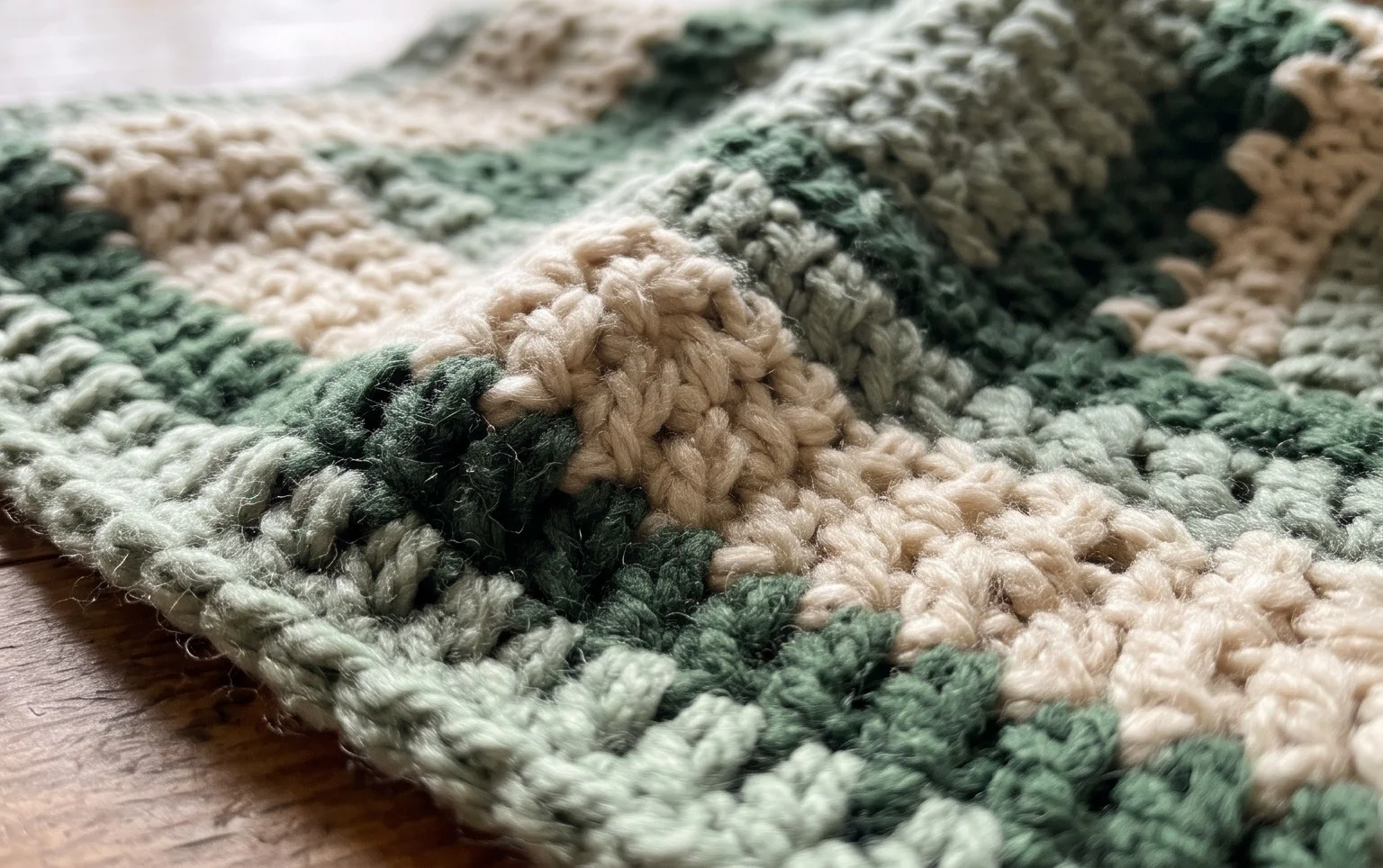
Finishing your blanket means you have a useful, handmade layer ready for a sofa, a reading chair, or a thoughtful gift. The repeating rows give the fabric a cozy texture, and seeing it grow one section at a time makes this a satisfying project to pick up between other tasks. For a simple variation, work the blanket in two colors and change shades every few rows for clear stripes. When yours is finished, share a photo on Pinterest or your favorite social media platform so other crocheters can see your color choices and finished texture. If you enjoyed this pattern, explore more free crochet patterns on the blog for your next relaxing project.