Easy Granny Heart Coaster: Free Beginner Pattern
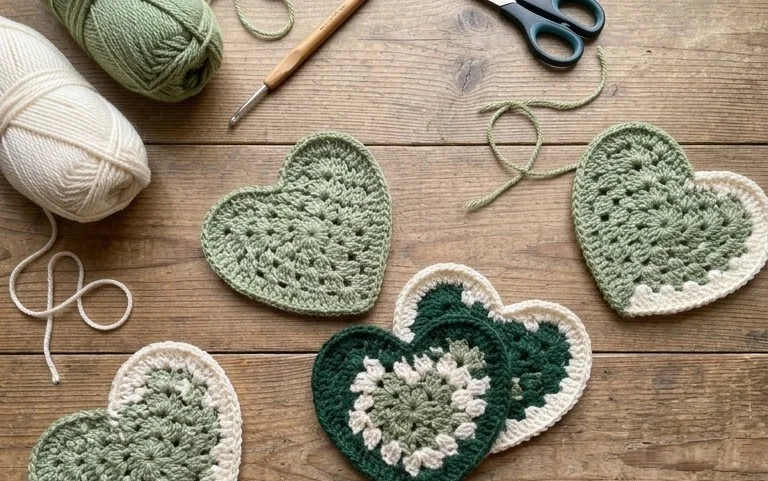
A small heart-shaped coaster in cotton yarn brings a cheerful touch to a coffee table, bedside stand, or handmade gift basket. This granny heart coaster has the familiar open texture of granny clusters and a sweet outline that looks right at home in a set of mixed colors. Beginners can practice working clusters and keeping their tension even, while experienced crocheters can finish one in a relaxed afternoon. The finished piece is light but useful for catching drips beneath a mug, and cotton makes it easy to wash after use. In this tutorial, you’ll learn how the stitches build the heart shape, how to keep the edges tidy, and how to adjust your yarn and hook for a coaster that lies flat. Make one as a quick gift or crochet a small stack for your own table.
Why You’ll Love This Pattern
A firm cotton stitch gives this square dishcloth a textured surface that works well for wiping counters and washing dishes. The pattern uses single crochet in straight rows, so you can focus on keeping the edges even rather than learning a complicated repeat. It takes about two to three hours to make, uses roughly 80 yards of yarn, and makes a useful small gift alongside a bar of soap or a kitchen towel.
The simple shape is handy for practicing consistent tension: each row has the same stitch count, and there is no shaping or seaming. Cotton is also easy to wash after use. Choose a smooth, light-colored yarn if you want the stitches to be easy to see while you work.
The rows were easy to keep track of, and the cotton cloth came out sturdy without feeling stiff.
— Mara, home crocheter
Pattern Overview & Skill Level
- Skill Level: Beginner.
- Approximate Time: Two to three hours, depending on your pace and tension.
- Construction: A flat square worked in single crochet rows, turning at the end of each row. A short border is worked around the finished edges.
- Finished Dimensions & Sizing: About 7.5 by 7.5 inches (19 by 19 cm), before washing and blocking. Small differences are normal because cotton yarn and individual tension vary.
Materials & Supplies Needed
- Yarn: About 80 yards (73 m) of worsted-weight (#4) 100% cotton yarn in one color. A smooth, tightly spun cotton is absorbent and holds up to repeated washing.
- Hook Size: 5.0 mm / H-8 crochet hook. If your fabric feels stiff, try a 5.5 mm / I-9 hook; the finished cloth will be a little larger and looser.
- Notions: Tapestry needle for weaving in ends, scissors, and a ruler or measuring tape. A stitch marker is optional for marking the first stitch of each row.
- Substitutions: Cotton-linen yarn can make a slightly drapier cloth. Cotton-bamboo blends tend to feel softer and may stretch more when wet. Keep the yarn close to worsted weight for a similar size; thinner yarn makes a smaller cloth, while bulky yarn makes a thicker, larger one and uses more yarn.
Gauge: 16 single crochet stitches and 18 rows measure about 4 inches (10 cm) using the recommended hook. Make a small swatch if you want to check the finished size. Gauge is less important for a dishcloth than for a fitted garment, but a very loose fabric may wear sooner.
Stitch Guide & Abbreviations (US Terms)
- ch = chain.
- sc = single crochet. Insert the hook in the indicated stitch, yarn over and pull up a loop, yarn over and pull through both loops.
- sl st = slip stitch. Insert the hook in the indicated stitch, yarn over, then pull the yarn through the stitch and the loop on the hook.
- st / sts = stitch / stitches.
- sc evenly = work single crochet stitches at regular intervals along an edge. Space them evenly so the edge stays flat and does not ripple.
The turning chain does not count as a stitch in this pattern. Work the first single crochet of each new row into the first stitch, not into the turning chain.
Step-by-Step Pattern Instructions
Dishcloth
With cotton yarn and a 5.0 mm hook, make a starting chain of 31. Keep the chain relaxed; a tight foundation chain can pull the lower edge inward. The turning chain at the start of each row does not count toward the stitch total.
- Row 1: Sc in the second ch from the hook and in each ch across. Turn. (30 sts)
- Rows 2–30: Ch 1, sc in each st across, turn. (30 sts each row)
Measure the piece after Row 30. It should be close to square and about 7.5 inches tall. If it is noticeably shorter or taller than it is wide, you can add or remove rows, but changing the row count will alter the finished dimensions.
Border and Finish
Do not fasten off after Row 30. Ch 1, then work a round of single crochet around the square. Along the top and bottom edges, work 1 sc in each stitch. Along each side edge, work about 1 sc in the end of each row. Work 3 sc in each corner to help the border turn without puckering. Sl st to the first sc to join. (132 sts, including the corner stitches)
Fasten off, leaving a tail of about 6 inches (15 cm). Thread the tail onto a tapestry needle and weave it through the backs of several stitches. Change direction once to help secure it, then trim the excess. Weave in the starting tail the same way. Lay the cloth flat and gently adjust the corners and edges.
If the border waves, it may have too many stitches along the sides. If the sides pull inward, add a few evenly spaced sc along each side on the next cloth. The three stitches at each corner should remain in place.
Care & Washing Instructions
- Wash cotton in cool or warm water, up to 40°C (104°F), with similar colors.
- Dry flat or tumble dry on low; reshape the square while it is damp.
- Block by laying it flat and smoothing the edges; follow the yarn label if you use a blend or a different fiber.
Pro Tips & Common Mistakes to Avoid
- Keep your turning chain loose enough that the row edges do not draw inward. If the first stitch is hard to see, place a marker in it before turning.
- Count the 30 stitches at the end of every row, especially when you reach the last stitch. Accidentally working into the turning chain can add stitches and make the sides uneven.
- Weave in each end with a tapestry needle through the backs of several stitches, then change direction before trimming. A short tail woven in only one direction can work loose with washing.
- To make a larger cloth, add rows until the piece is square, then add the border. A wider starting chain also increases the stitch count; both changes use more yarn. For a smaller cloth, reduce the starting chain and work the same number of rows as stitches.
Frequently Asked Questions
Can I use acrylic yarn instead of cotton?
You can, but acrylic may absorb water differently and can feel warmer or less absorbent when used for washing dishes. Cotton is the best choice for a reusable kitchen cloth. If you use another fiber, follow its care label and expect a different texture.
How can I make the dishcloth larger or smaller?
For a larger square, begin with more chains and work more rows to match the new width. For a smaller one, begin with fewer chains and stop when the height is close to the width. The stitch count in each row should equal the number of stitches in your foundation row.
Is this a good first crochet project?
Yes. The cloth uses only chains, single crochet, and slip stitches, with no shaping or sewing. Practice making a short swatch first if you are new to keeping row edges straight.
Can I sell dishcloths made from this pattern?
Check the designer’s terms before selling finished items, and use your own photographs and product description. If you sell the cloth, describe the yarn fiber and washing instructions accurately so buyers know how to care for it.
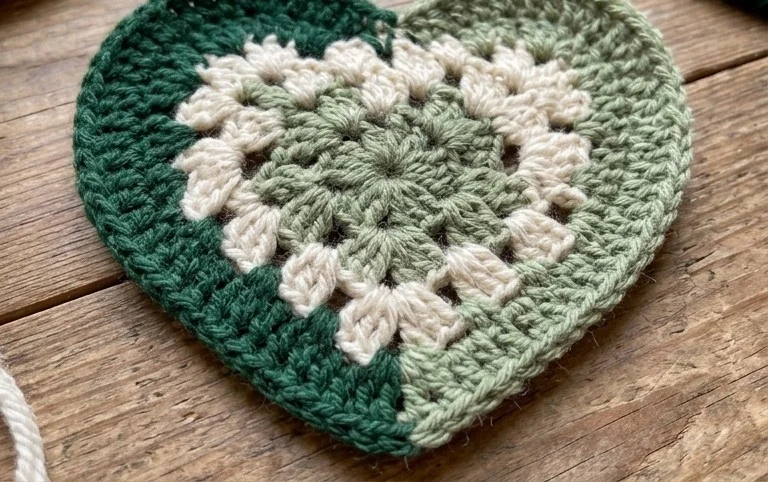
Your finished heart coaster adds a handmade touch beneath a mug and gives you a small, useful project to feel good about completing. Try a two-color version by changing yarn for the final round, or use a slightly larger hook if your stitches tend to pull tight. A washable cotton yarn keeps the coaster practical for everyday use, and a set in coordinating shades makes a thoughtful housewarming gift. If you enjoyed making yours, share a photo on Pinterest or your favorite social media platform so other crocheters can see your colors and stitch work. Then explore more free patterns on the blog for another small project to keep your hook busy.