Colorful Christmas Tree Skirts: Easy Free Crochet Patterns
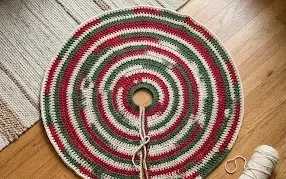
A crocheted tree skirt brings a soft, handmade finish to the space beneath the branches, with cheerful color peeking out around the presents. These colorful Christmas tree skirts can suit a first-time holiday maker as well as someone who enjoys changing the room’s look each December. Choose classic red and green, snowy cream with a bright border, or a mix of leftover yarn shades. The work is satisfying because simple stitches build into a broad piece you can spread out and see taking shape. In the patterns ahead, you’ll find ideas for working in rows or rounds, keeping edges neat, and using color changes to create stripes and other seasonal details. Pick a palette that fits your tree and enjoy making a decoration you can bring out year after year.
Why You’ll Love This Pattern
A cotton dishcloth worked in single crochet makes a useful, washable project with a firm, even texture. This beginner-friendly pattern uses rows rather than shaping, so you can focus on keeping the edges straight and the stitch count consistent.
The 30-stitch width creates a compact cloth that fits comfortably in the hand. One solid color keeps the fabric simple, while leftover cotton can be used for stripes if you change colors at row ends. The repeat is easy to pause and pick up again, which makes the project handy for short crochet sessions.
The rows were easy to count, and the finished cloth feels sturdy without being stiff.
— Maya, sample tester
Pattern Overview & Skill Level
- Skill Level: Beginner. You need to know how to chain and make single crochet stitches.
- Approximate Time: About 2–3 hours, depending on your pace and how often you stop to check the edges.
- Construction: A flat rectangle worked back and forth in rows, with a turning chain at the start of each row. The border is the cloth’s natural edge; no separate edging is required.
- Finished Dimensions & Sizing: Approximately 7.5 × 7.5 in (19 × 19 cm) after washing and drying flat. Small differences in tension may change the finished size.
Materials & Supplies Needed
- Yarn: About 75–100 yd (69–91 m) of medium-weight cotton yarn, also called Worsted #4. Use one color, or combine cotton scraps that total at least 100 yd.
- Hook Size: 5.0 mm / H-8 crochet hook. If your stitches are very loose, try a 4.5 mm hook; if they are very tight, try a 5.5 mm hook and check your gauge again.
- Notions: Tapestry needle for weaving in the ends, scissors, measuring tape, and a stitch marker if you want to mark the first stitch of each row.
- Substitutions: A similar-weight cotton or cotton-bamboo yarn is suitable. Acrylic can be used for a cleaning cloth, but it may absorb water differently and feel less textured. Avoid fuzzy or highly stretchy yarn, which can make the fabric harder to scrub with. A different yarn weight or hook can change the cloth’s dimensions and the amount of yarn needed.
Gauge: 16 sc and 18 rows measure about 4 in (10 cm) in single crochet after washing and drying flat. Gauge matters less for a dishcloth than for a fitted item, but matching it helps you get close to the stated dimensions.
Stitch Guide & Abbreviations (US Terms)
- ch: Chain.
- sc: Single crochet. Insert the hook into the indicated stitch, yarn over and pull up a loop, then yarn over and pull through both loops on the hook.
- st(s): Stitch(es).
- rep: Repeat.
- sk: Skip.
The turning chain does not count as a stitch in this pattern. Work the first single crochet into the first stitch, directly below the turning chain. This keeps the stitch count at 30 and helps prevent the sides from gradually widening.
Step-by-Step Pattern Instructions
Dishcloth
- Foundation: Ch 31. Keep the chain loose enough that the lower edge does not pull inward.
- Row 1: Sc in the second ch from the hook and in each ch across. Turn. (30 sts)
- Row 2: Ch 1, sc in each st across. Turn. (30 sts)
- Rows 3–30: Rep Row 2 for 28 more rows, keeping 30 sc in every row. After Row 30, do not turn. (30 sts per row)
Finishing
Cut the yarn, leaving a tail of about 6 in (15 cm), and pull it through the last loop to secure it. Thread the tail onto a tapestry needle. Weave it through the stitches on the edge for about 1–2 in (2.5–5 cm), then change direction once before trimming the remaining yarn. Repeat for the starting tail.
Wash the cloth before using it. Cotton can relax slightly in water, so lay it flat and gently smooth the corners and sides into a square while it dries. If your cloth measures a little differently, that is fine as long as the fabric lies flat and the rows are even.
Care & Washing Instructions
- Wash cotton dishcloths in a washing machine with warm water, around 40°C (104°F), or follow the yarn label if it gives a lower limit.
- Dry flat when possible; reshape the corners while the cloth is damp to reduce curling.
- Block lightly by smoothing the damp cloth into shape, without stretching the stitches; follow the yarn label for fiber blends.
Pro Tips & Common Mistakes to Avoid
- Keep the tension even: A tight foundation chain can make the bottom edge narrower than the rest of the cloth. If that happens, remake the chain with a slightly larger hook, then switch back to the 5.0 mm hook for Row 1.
- Count each row: Check for 30 stitches before turning. Place a marker in the first stitch of a row if it is easy to miss, and remember that the turning chain does not count.
- Hide ends securely: Weave each tail through several stitches, change direction, then trim it. A short tail woven through only one row can loosen during washing.
- Adjust size carefully: To make the cloth wider, add chains to the foundation; each added chain gives one additional stitch. Add rows to make it taller. A larger cloth uses more yarn, so keep extra cotton on hand and check the finished shape as you work.
Frequently Asked Questions
Can I use acrylic yarn instead of cotton?
Yes, but cotton is generally a practical choice for a dishcloth because it absorbs water well and tolerates repeated washing. Acrylic may feel smoother or less absorbent. Check the yarn label for washing instructions before substituting.
How can I make the dishcloth larger or smaller?
For a wider cloth, change the foundation chain and work one single crochet into each chain after the first. For a taller cloth, work more or fewer rows. Keep the same stitch count from Row 1 onward, and expect a larger cloth to use more yarn.
Is this pattern suitable for a first crochet project?
Yes. It uses chains and single crochet stitches in straight rows, with no increases, decreases, or sewing. The main challenge is keeping 30 stitches in every row, so count before turning until the edges become easy to read.
May I sell dishcloths made from this pattern?
Check the designer’s terms before selling finished items, and do not claim someone else’s written pattern as your own. Follow any yarn-label care guidance when giving a cloth to a customer.
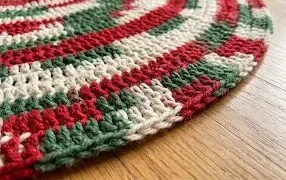
A finished tree skirt gives the presents a defined place to gather and adds a handmade note to your holiday room. You can keep the pattern’s shape and change the palette to match your decorations, or make a larger version by adding rounds or rows where the design allows. When the last end is woven in, spread the skirt flat and check that it sits evenly around the tree base. Share a photo of your finished piece on Pinterest or your favorite social platform; it can give another maker a color idea for their own home. Then browse the blog for more free crochet patterns, from small seasonal gifts to useful projects you can enjoy throughout the year.